How many times have you chosen a holiday in Greece or Spain not just for the beach, but because you knew the evenings would bring memorable culinary experiences in an atmosphere that, until now, the Romanian seaside could not offer? This summer, that perspective changes.
There comes a moment when food goes beyond being a simple necessity and becomes part of a complete experience. At Nobu in Ibiza, the experience goes beyond the dishes themselves and focuses on space, energy, and atmosphere. At Nammos in Mykonos, a Greek salad is not expensive because it is better than any other Greek salad; it is expensive because you eat it by the beach, with live music and a sunset that looks like a scene from a movie. Gastronomic tourism does not sell taste alone; it sells memorable experiences.
This shift is beginning to take shape on the Romanian seaside as well. In 2026, the local tourism landscape is undergoing a major transformation, with a new project currently in development that aims to offer a local alternative to the experiences people usually seek abroad. That project is NIBIRU, the most ambitious private project developed on the Black Sea coast, promising a complete experience close to home for Romanians and a new landmark destination for international tourists.
Beyond everything it offers in terms of entertainment, NIBIRU will also allow people to enjoy a diverse culinary experience.
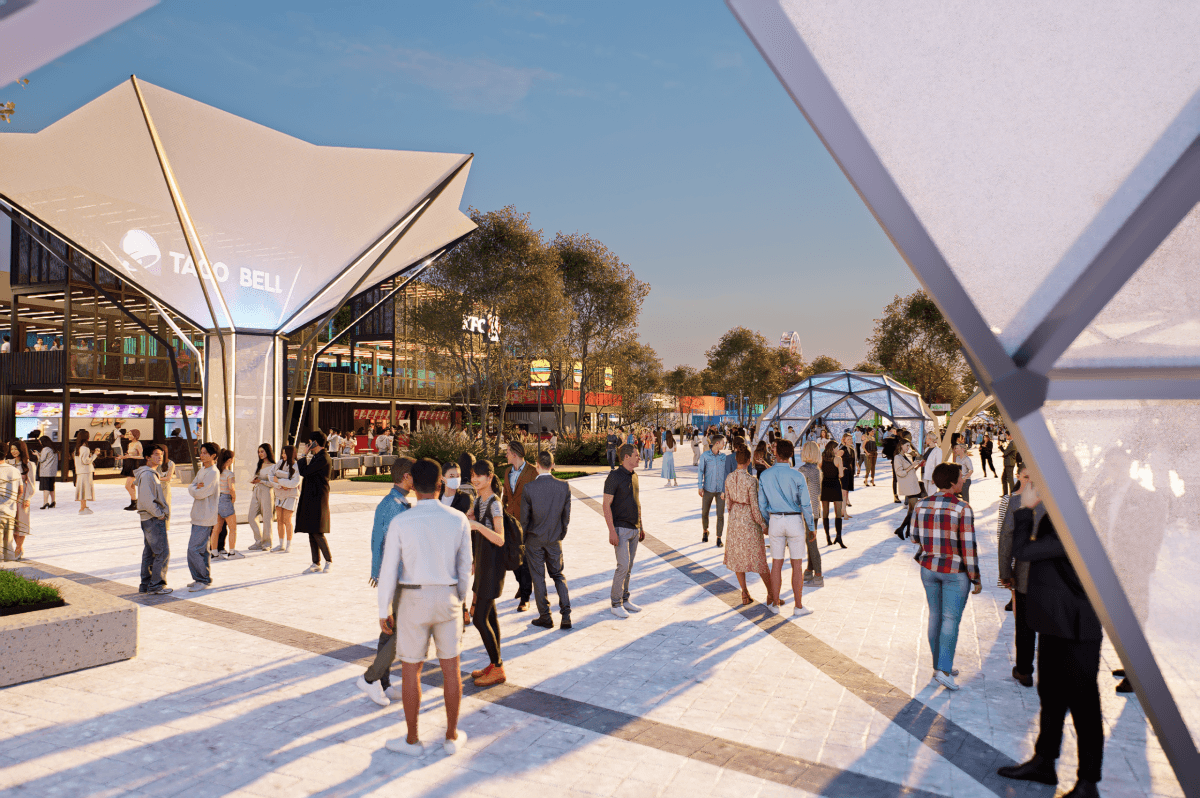
If Coachella proved that food can be turned into an attraction in its own right, from food trucks to pop-ups by celebrity chefs, NIBIRU brings that philosophy to the Romanian beach, but on another level, because it is more than a festival. The project functions as a complex ecosystem where festivals, clubs, art, retail, and gastronomy coexist in an integrated space, connected by a spectacular promenade with more than 2,000 trees and plants, daily artistic shows, art installations, and street performers — a temporary summer city.
Food and atmosphere
What makes a meal at Nikki Beach in St. Tropez memorable is not just French cuisine, but the entire context: music, design, social energy, and ambiance.
The same concept will be found at NIBIRU, where the evening promenade will provide the setting for a unique world that takes the seaside holiday to another level of entertainment. Daily free-access shows, visual installations, and a wide range of restaurants all create an evening rhythm in which going out for dinner becomes something relaxing, not a logistical decision.
More than 30 restaurants, cafés, and bars will be present in the resort, covering a wide range of options, from fast food to gourmet and à la carte restaurants. The list of already confirmed brands includes names well known to the Romanian public: FRYDAY, Cartofisserie, Splendid Chicken, Burger Factory, and Trevi Pizza — brands with proven customer loyalty that know how to deliver quality. The offering also includes à la carte restaurants and gourmet concepts designed for those who want more than a quick meal between two shows.
Accessibility and positioning
The estimated budget for a full evening, including entertainment, food, and drinks, is around 200–250 lei, with a minimum spend of 25 lei guaranteeing free access to NIBIRU.
This democratization of entertainment places NIBIRU in a highly relevant competitive space: complex experiences comparable to major international leisure destinations, but in a format that is significantly more accessible to the wider public.
What is new
For several decades, the Romanian seaside has focused predominantly on accommodation and the beach, without building a complete ecosystem of experiences capable of generating loyalty and repeat visits. Places like Ibiza or Mykonos do not thrive because they have better beaches; they thrive because of their cultural and gastronomic ecosystems: restaurants with spectacular architecture and beach clubs with international DJs. NIBIRU understands that the charm of a seaside holiday lies in entertainment and is building a complete holiday destination, a mix of lifestyle, gastronomy, and entertainment.
By integrating a fashion area for local designers, a stand-up comedy club, a summer library, and spaces dedicated to art, the project transforms gastronomy from a necessity into a central point within a broader network of experiences.
The summer of 2026 will mark a new chapter for Romanian tourism, one in which the seaside begins to compete through experiences, diversity, and leisure infrastructure in a way much closer to international standards.